



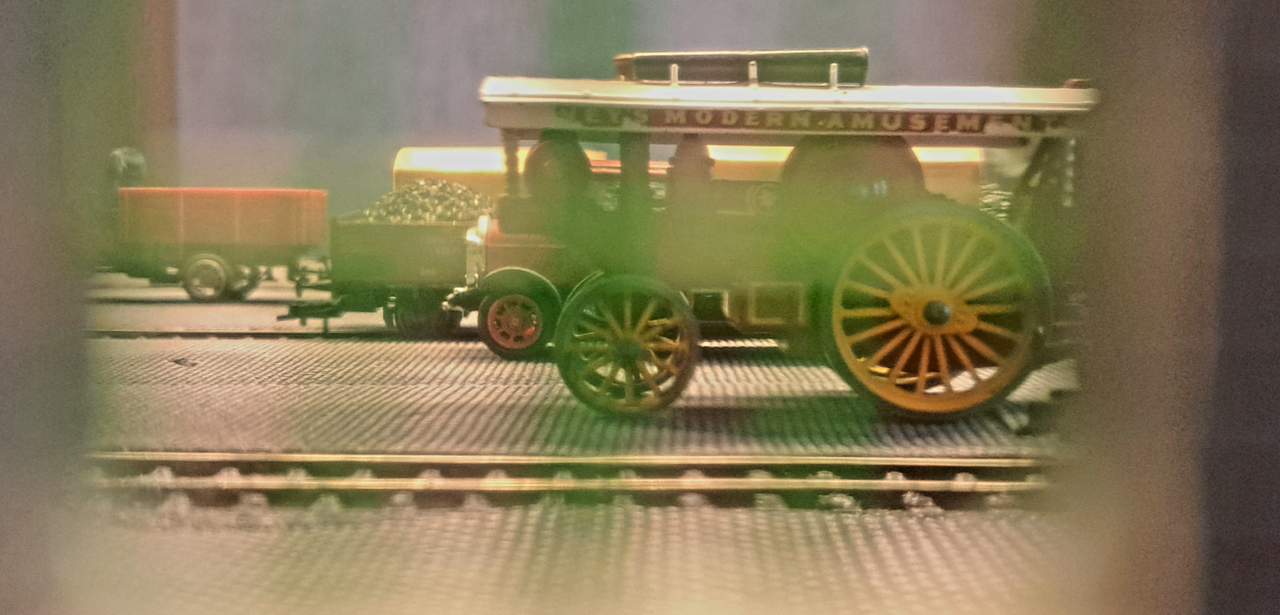
For many a year, Mark had cherished the wish of possessing a model railway devoted to his British — or, more precisely, his Celtic — homeland. Sturmi and Doncolor deemed this a most worthy cause and resolved to build such a railway for him. The locomotives intended for the undertaking had already been procured at the beginning of the year.
The Timesaver Shunting Puzzle
Mark, alas, has but little room to spare in his flat. A grand and sprawling model railway was therefore quite out of the question from the very beginning. Doncolor consequently proposed a shunting puzzle: a compact arrangement capable of providing a remarkable amount of railway operation and shunting amusement within the most modest of spaces.
Yet one question remained: what manner of railway should this little shunting layout portray?
A Harbour Railway It Was to Be
Mark was born in Plymouth, in that ancient corner of Britain where the old Celtic heritage of the West Country still casts its long shadow. His very British roots are planted deeply there.
Plymouth is a great English port city in the county of Devon, lying just to the east of the River Tamar, which forms the ancient boundary with Cornwall. Though firmly situated in Devon and by no means a part of Cornwall, the country thereabouts shares deep historic, cultural and ancient Celtic roots reaching back to the old Kingdom of Dumnonia.
And Plymouth, of course, has ever been bound to the sea.
What, then, could be more fitting than to fashion our little shunting puzzle after a harbour railway?
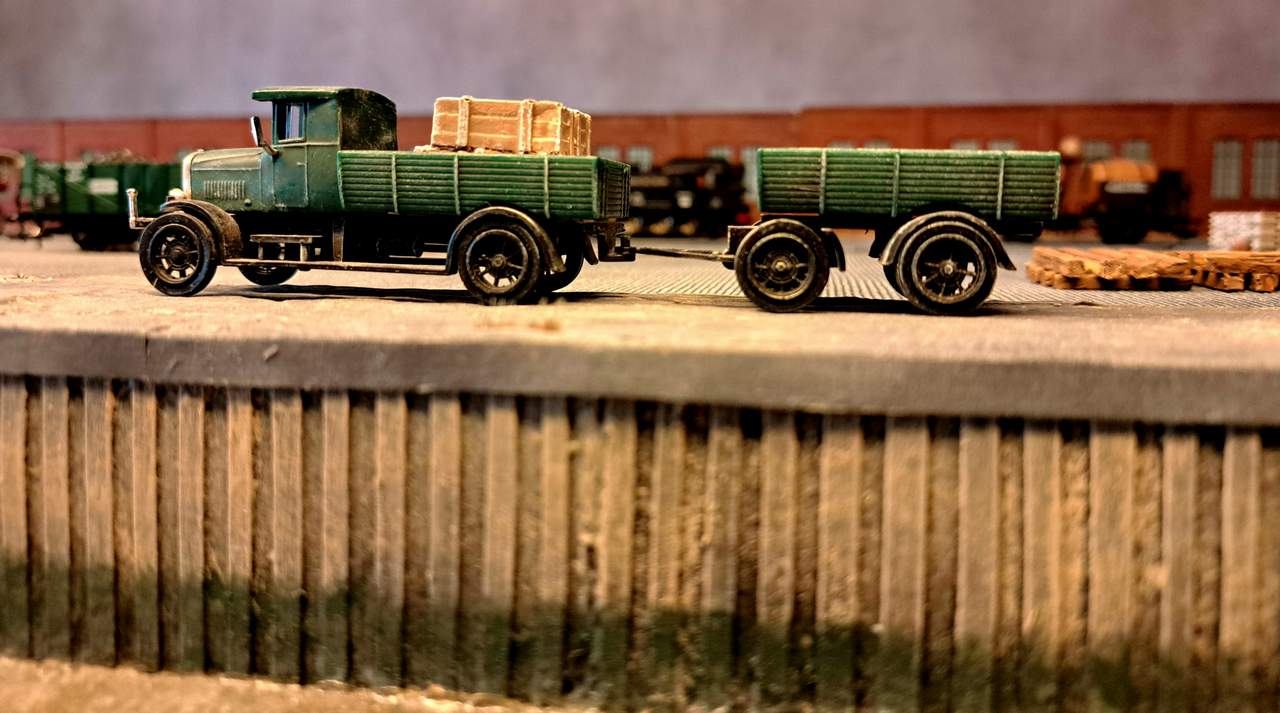
A view of the sheet-piled quay wall at New Plymouth Harbour.
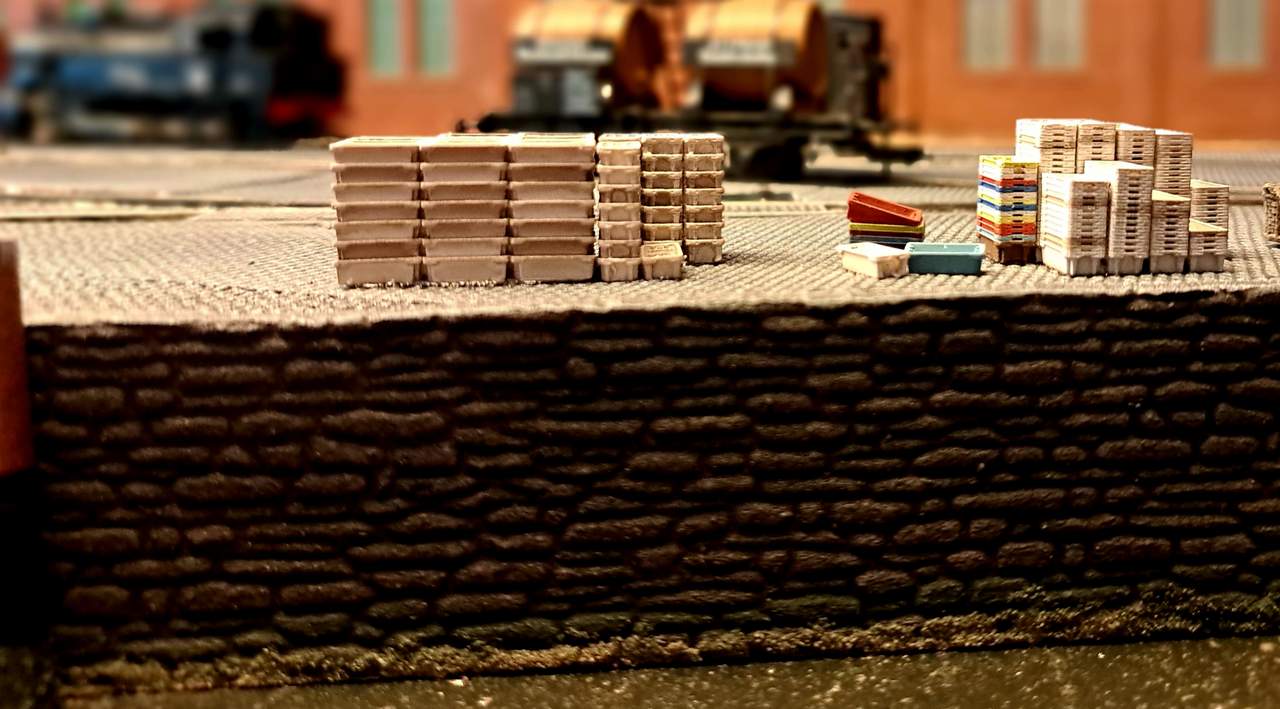
Fresh fish for London — a most perishable consignment requiring prompt forwarding by rail
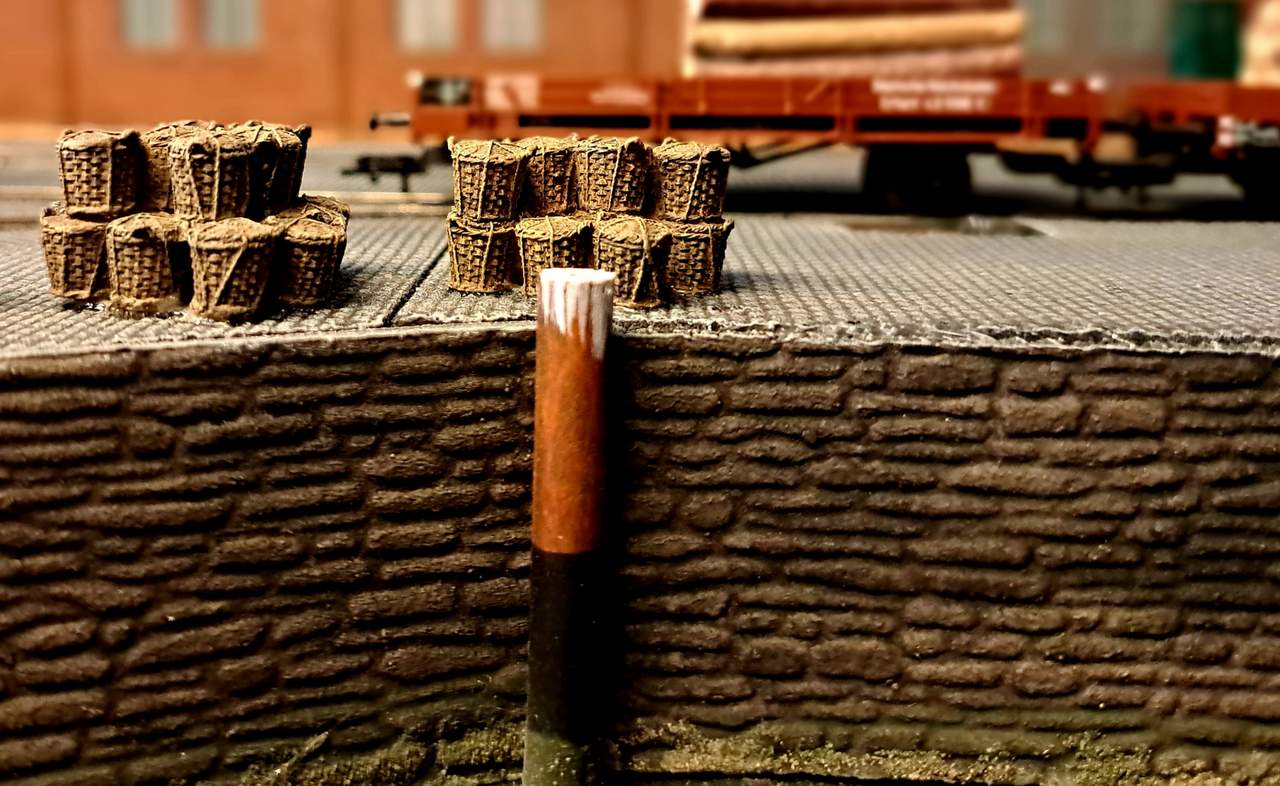
An urgent consignment of fresh fish, awaiting swift dispatch to London.
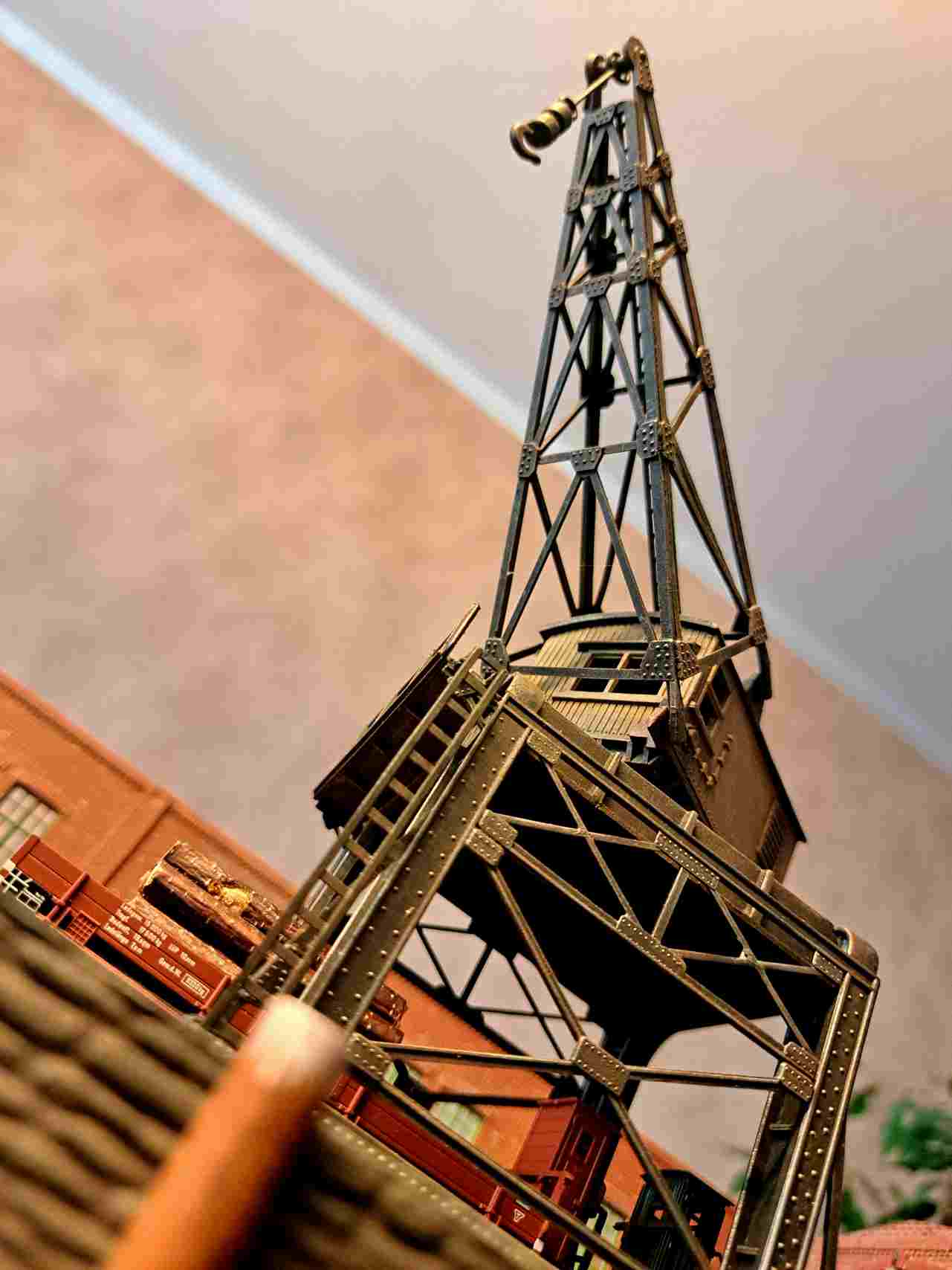
A view of the travelling gantry crane at New Plymouth Harbour.
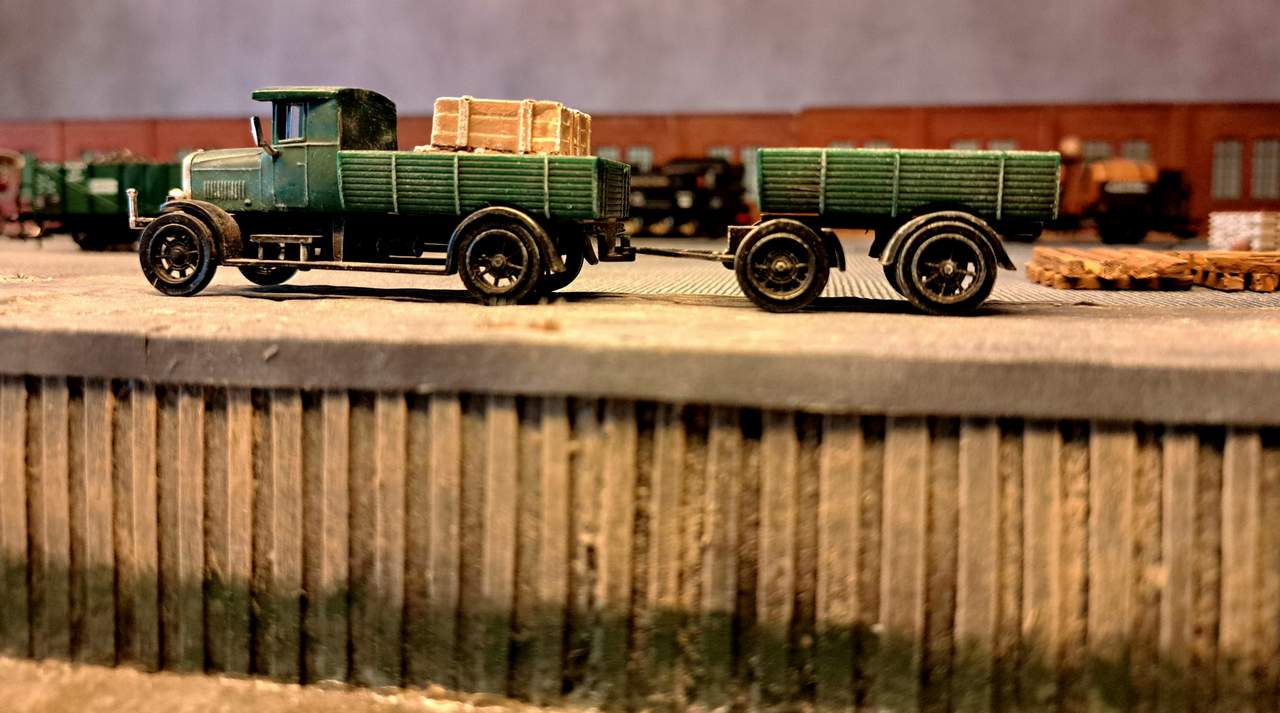
With growing impatience, the lorrymen await their turn to have their vehicles loaded
And Thus It Came to Pass
Doncolor took his existing track plan and altered it to suit the considerably shorter proportions of British goods wagons. This was of some importance, for the usable length of each siding was to accommodate precisely one goods wagon together with its locomotive. And scarcely an inch more.
The sidings were laid alongside the quay wall of the fictitious harbour of New Plymouth, a busy little port watched over by its ever-diligent Harbour Master, one Mr Mark.
No proper harbour railway would be complete without the means of handling heavy and awkward merchandise, and so the quay was furnished with a travelling portal crane. Such contrivances were, of course, already a familiar sight in docks and harbours a century ago.
In the accompanying photographs we may behold the harbour railway at work. The locomotive and goods wagons shown belong to a rather more recent chapter of railway history, for the rolling stock destined eventually to serve upon the harbour railway is already safely stabled in Mark’s own stock of locomotives and wagons.
For the present purpose, however, these vehicles shall serve us admirably, giving a fair impression of how the completed little railway will appear in operation.
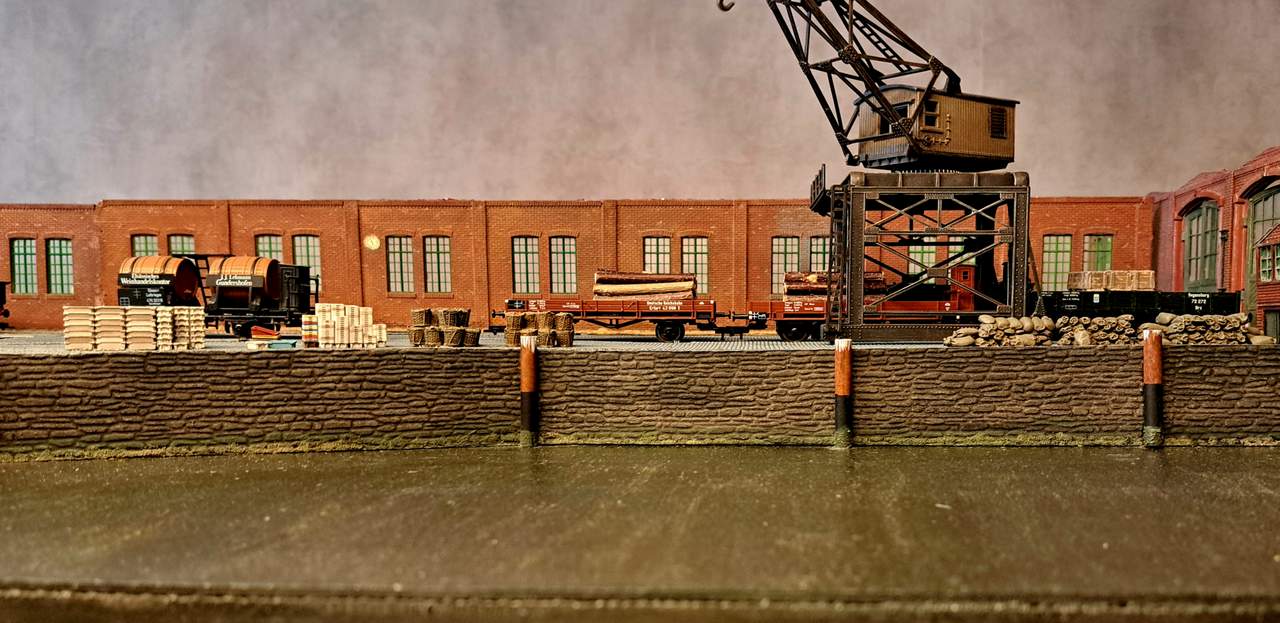
A brisk volume of goods traffic at the gantry crane
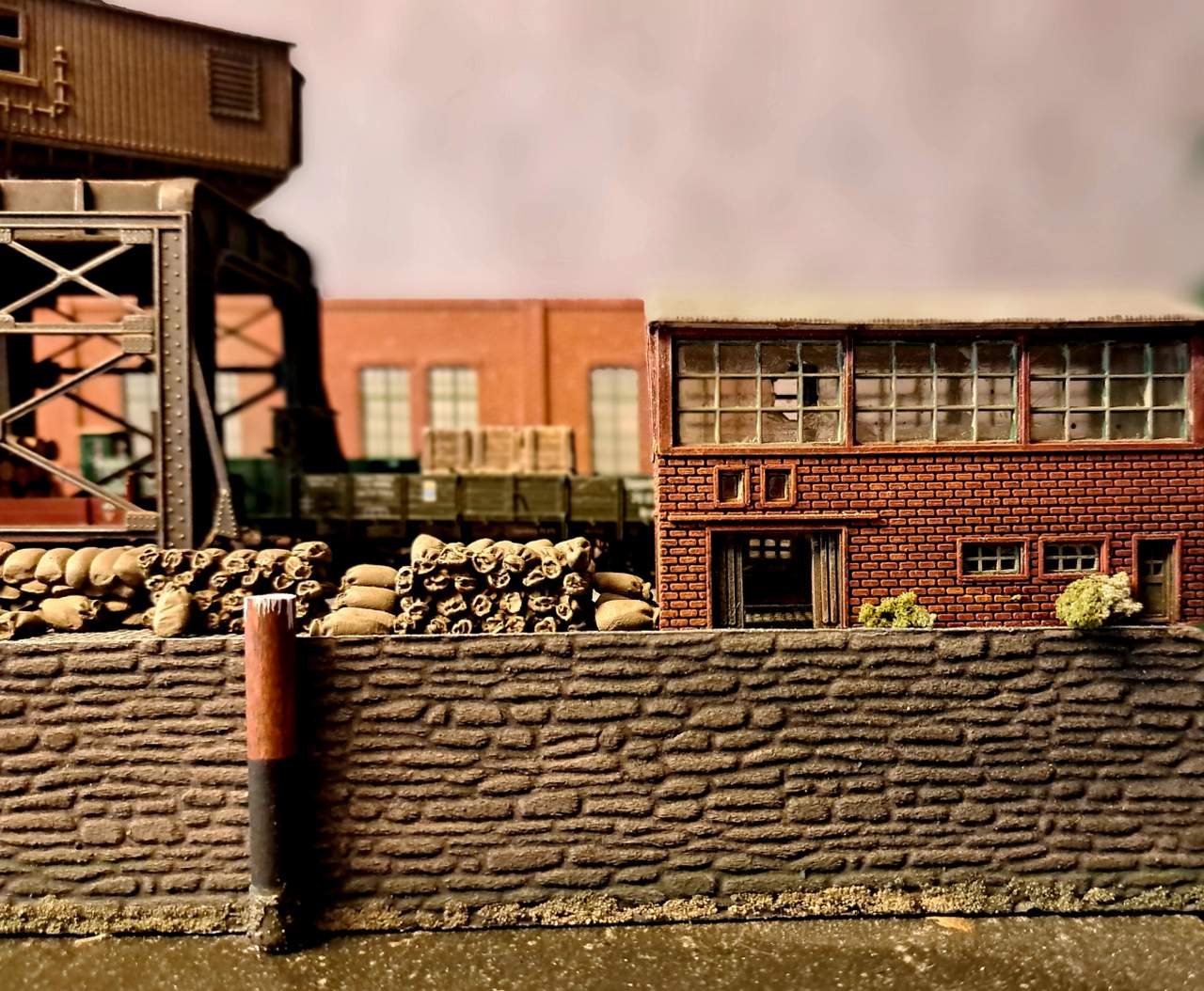
From the nearby workshops of the Harris Shipyard come the dull, rhythmic blows of steam-driven machinery.
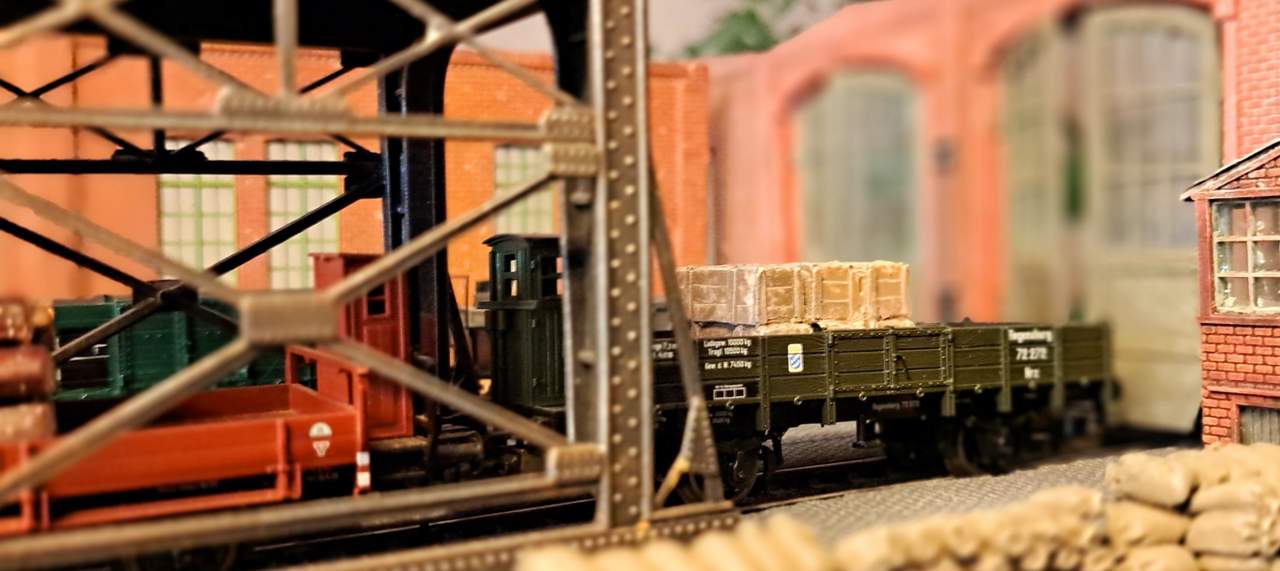
The gantry crane is kept exceedingly busy by the heavy flow of goods
The Workings Beneath the Railway
And how, one may ask, was the harbour railway contrived from a technical point of view?
The answer is pleasingly simple.
The track is ordinary Trix C Track, whilst the whole harbour railway is operated on direct current. Space-consuming large-radius points were deliberately dispensed with. Instead, the layout employs the straightforward 24-degree points from the standard Trix range.
The locomotives negotiate these sharper curves and points without the slightest complaint, and the short-wheelbase British goods wagons find them easier still.
Thus there was little cause to squander precious inches upon elegant sweeping pointwork where good, honest, compact trackwork would perform the duty perfectly well.
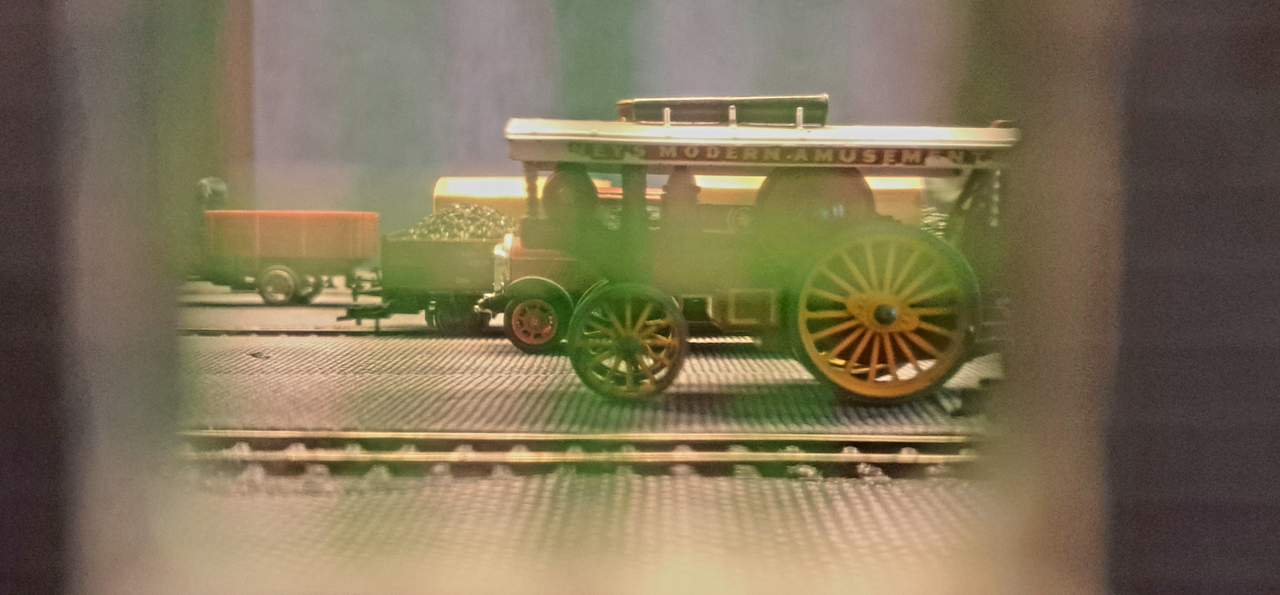
A view from the warehouses behind the harbour railway, looking out upon the shunting operations beyond.
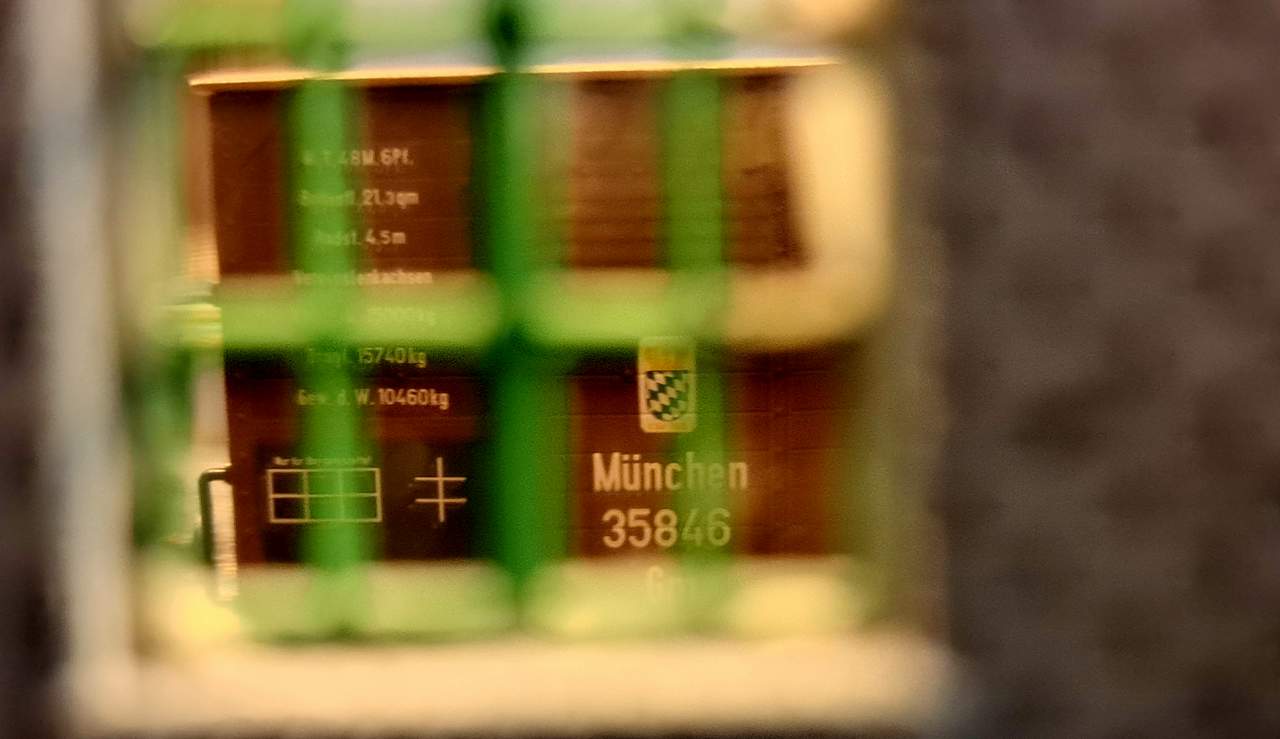
A view from the warehouses behind the harbour railway, looking out upon the shunting operations beyond.
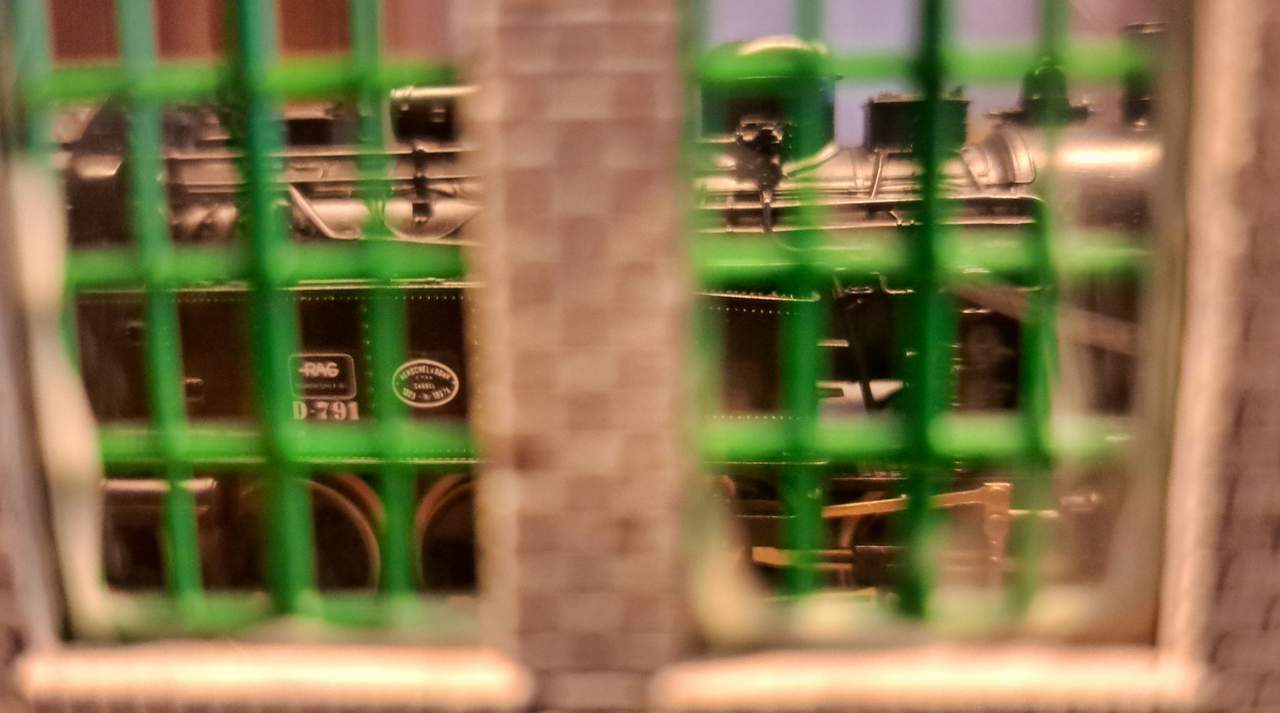
Looking out from the warehouses behind the harbour railway upon the busy shunting operations outside.
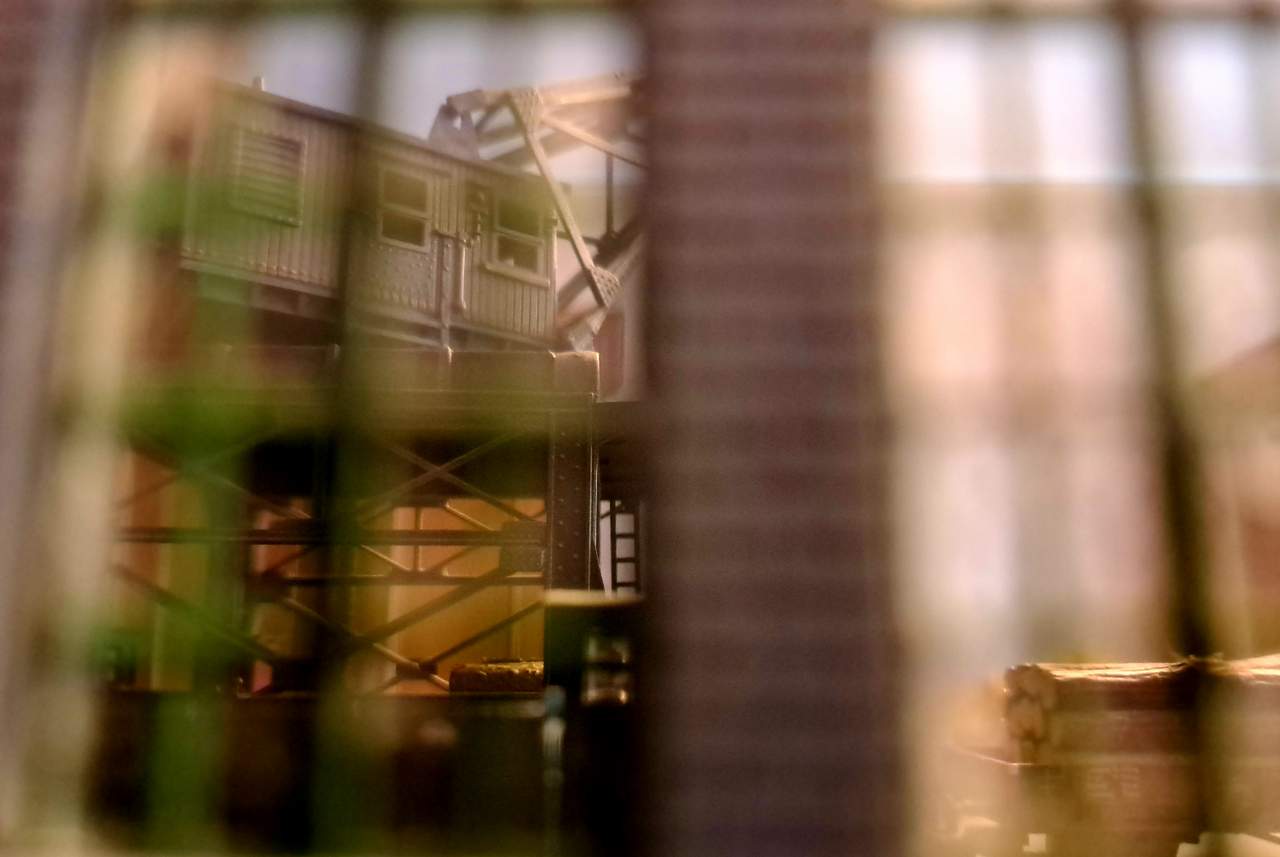
Looking out from the goods sheds upon the busy shunting taking place along the harbour railway
And What Did Mark Say of His Railway?
That, dear reader, we cannot yet tell you.
For Mark knows nothing whatsoever of his good fortune.
At present, the Harbour Master of New Plymouth remains blissfully unaware that his railway even exists.
That happy state of ignorance, however, shall not endure for very much longer.
Within the next few days, all shall be revealed.

The Harbour Master of New Plymouth is expected to take up his new post within the next few days
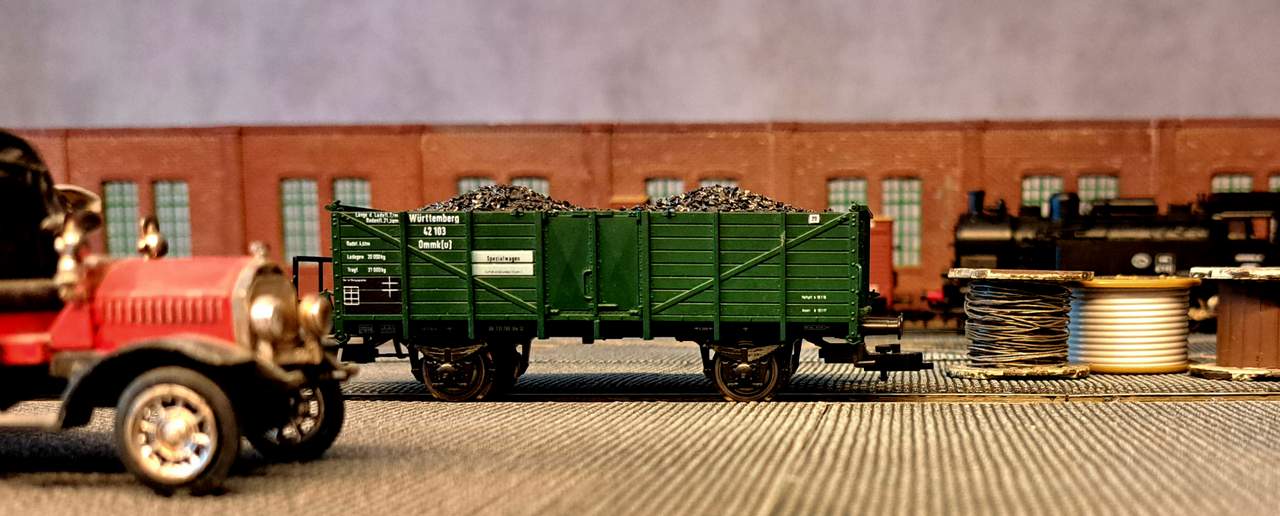
New Plymouth’s Harbour Master is expected to arrive and assume his new duties in the coming days.
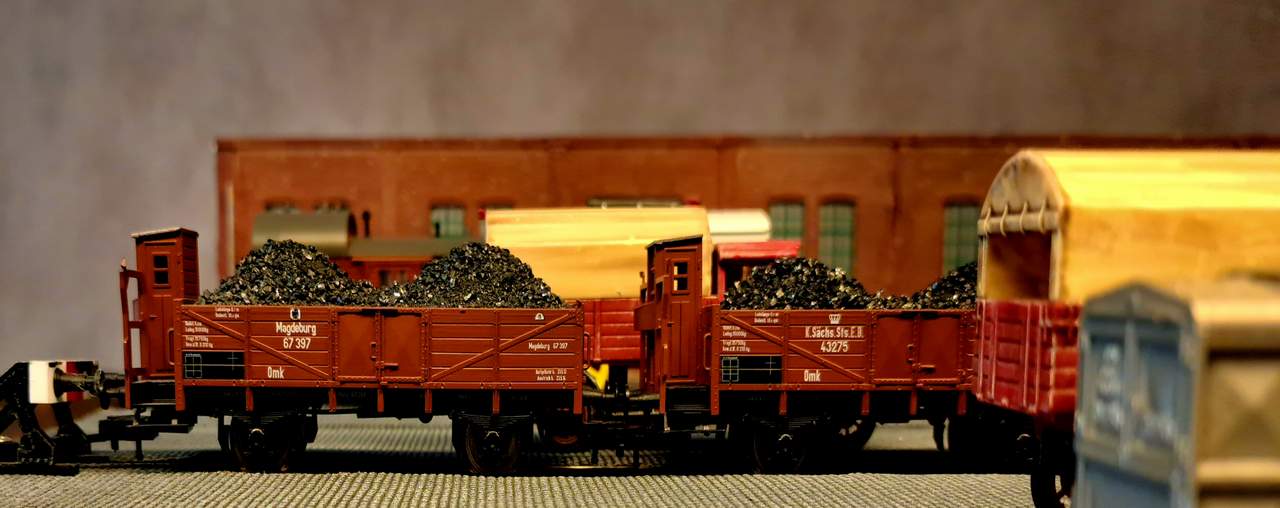
The newly appointed Harbour Master is expected at New Plymouth within the next few days, there to take up his post.
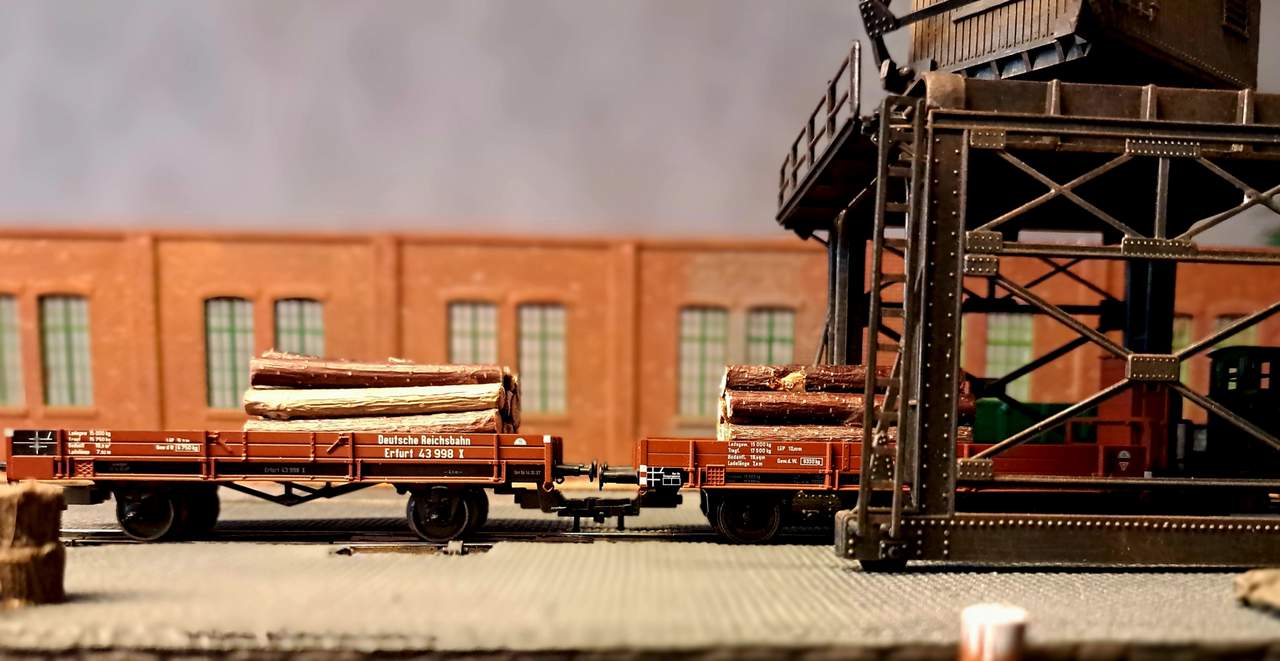
Word has it that the Harbour Master of New Plymouth shall shortly arrive to take up his new appointment

Hark, dear Mark! We most heartily hope that this little railway shall bring thee much joy and merriment, and that, in beholding it, thou mayest feel a small piece of thy homeland close at heart.






1 Kommentar
What the hell…………………………………………